Award & project study · Le Prix Charlotte Perriand 2027 · FRAC Grand Large, Dunkerque.
ArchDaily reported on 3 November that Anne Lacaton and Jean-Philippe Vassal had been named recipients of Le Prix Charlotte Perriand 2027. 1 The organiser’s calendar lists the Paris ceremony for 16 January 2027. 5 The announcement returns attention to a body of work in which the possibilities of existing buildings become a starting point for design.
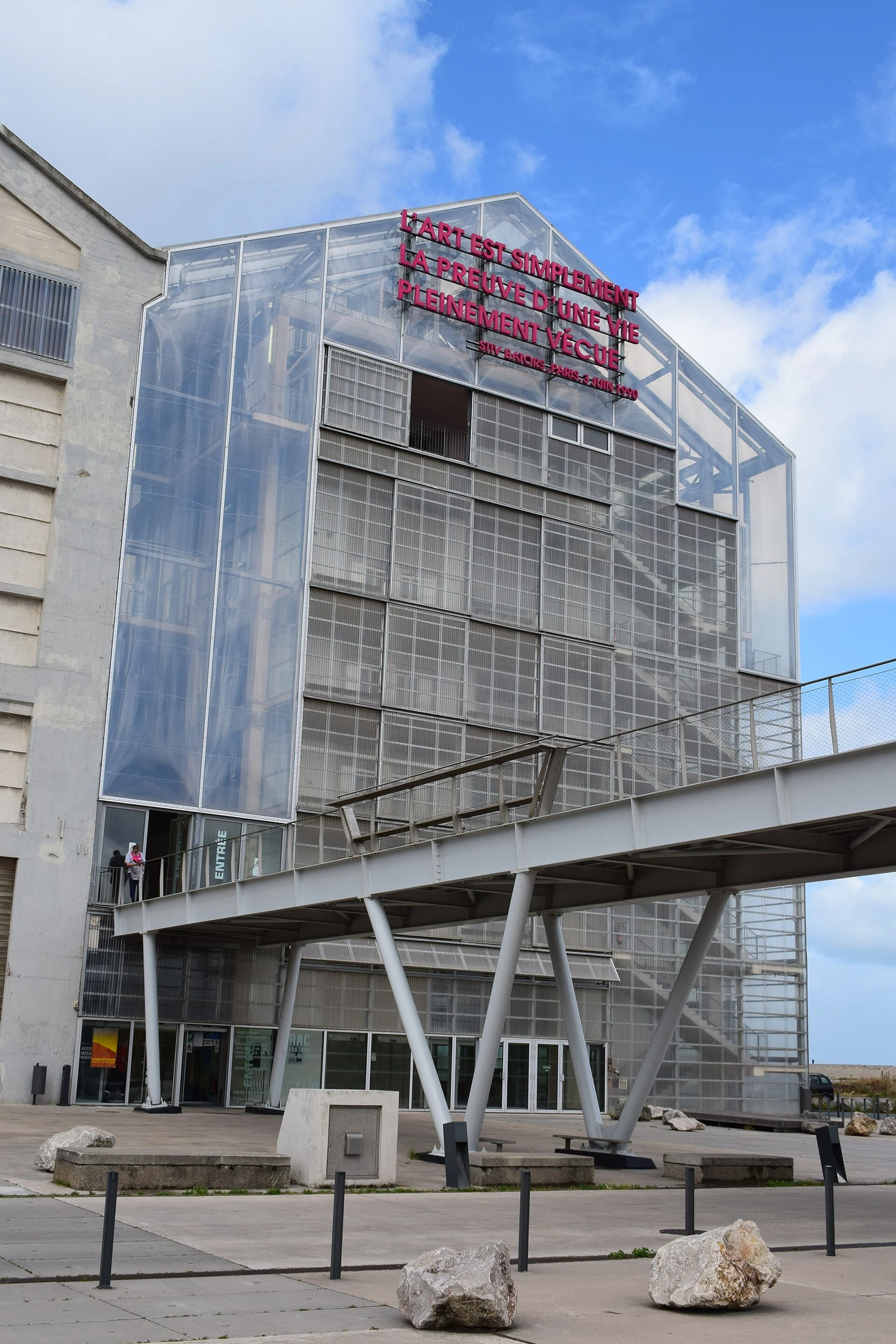
One especially clear example is FRAC Grand Large in Dunkerque. Lacaton & Vassal's project retained the former shipbuilding hall known as AP2 and added a second building with a matching overall profile beside it. The new structure accommodates the art institution's programme, allowing the original hall to retain its substantial open volume. 2
That arrangement places a demanding question early in a development brief: which qualities already exist, and how can a new programme be organised around them? A large inherited space may offer dimensions and capacities that would be difficult to recreate. Giving those qualities an explicit role can alter the balance between repair, extension and new construction.
The architects describe the addition through a lightweight envelope and a prefabricated structure supporting flexible platforms. Storage and exhibition requirements occupy the new building, while the retained hall can accommodate larger artistic work and public activities. The two parts can function together or separately, making operational choice part of the architectural organisation. 2
This is a useful construction lesson because retention needs a precise account of what is added. The existing structure continues to carry one set of possibilities; the new frame and its environmental enclosure carry others. Clear responsibility for each part allows a project to preserve an unusually generous space while meeting the practical requirements of its new institution.
The Pritzker Prize's 2021 account of Lacaton and Vassal's work likewise identifies respect for existing structures, spatial generosity and freedom of use as recurring concerns. The November award announcement belongs within that longer record of recognition. The recent honour provides the occasion for looking again; the project supplies the evidence through which the approach can be assessed. 3
FRAC makes reuse legible through a consequential design decision: it gives the old hall room to remain useful in its own terms. For a developer or cultural client, that invites a fuller inventory before a brief is fixed. The capacities of a building include its dimensions, atmosphere, connections and future range of use, alongside the work required to bring it into a new programme.