Exhibition · Hilliard Art Museum, Lafayette · Through 20 February 2027.
A portrait, a social document and an experiment in abstraction can share a medium while asking very different things of a viewer. A Century in Focus: Images from Women Photographers of the 20th Century, at the Hilliard Art Museum in Lafayette, Louisiana, brings that range into one exhibition drawn from its permanent collection. The show runs from 19 September 2026 to 20 February 2027. 1
The museum describes a selection spanning documentary photography, photojournalism, portraiture and experimentation. Its participating artists include Dorothea Lange, Sabine Weiss, Ruth Bernhard, Anne W. Brigman and Debbie Fleming Caffery. Their presence together encourages a reading of photographic history in which a shared struggle for recognition does not erase differences of subject, method or intention. 1
Lange offers a revealing point of entry. The Hilliard’s published image list includes her early portrait of her mother, dated around 1915, and Greg, Running, from 1958. Those works extend the frame around an artist most widely associated with Depression-era documentation. The exhibition places intimate and family subjects within the same larger history as public observation. 1
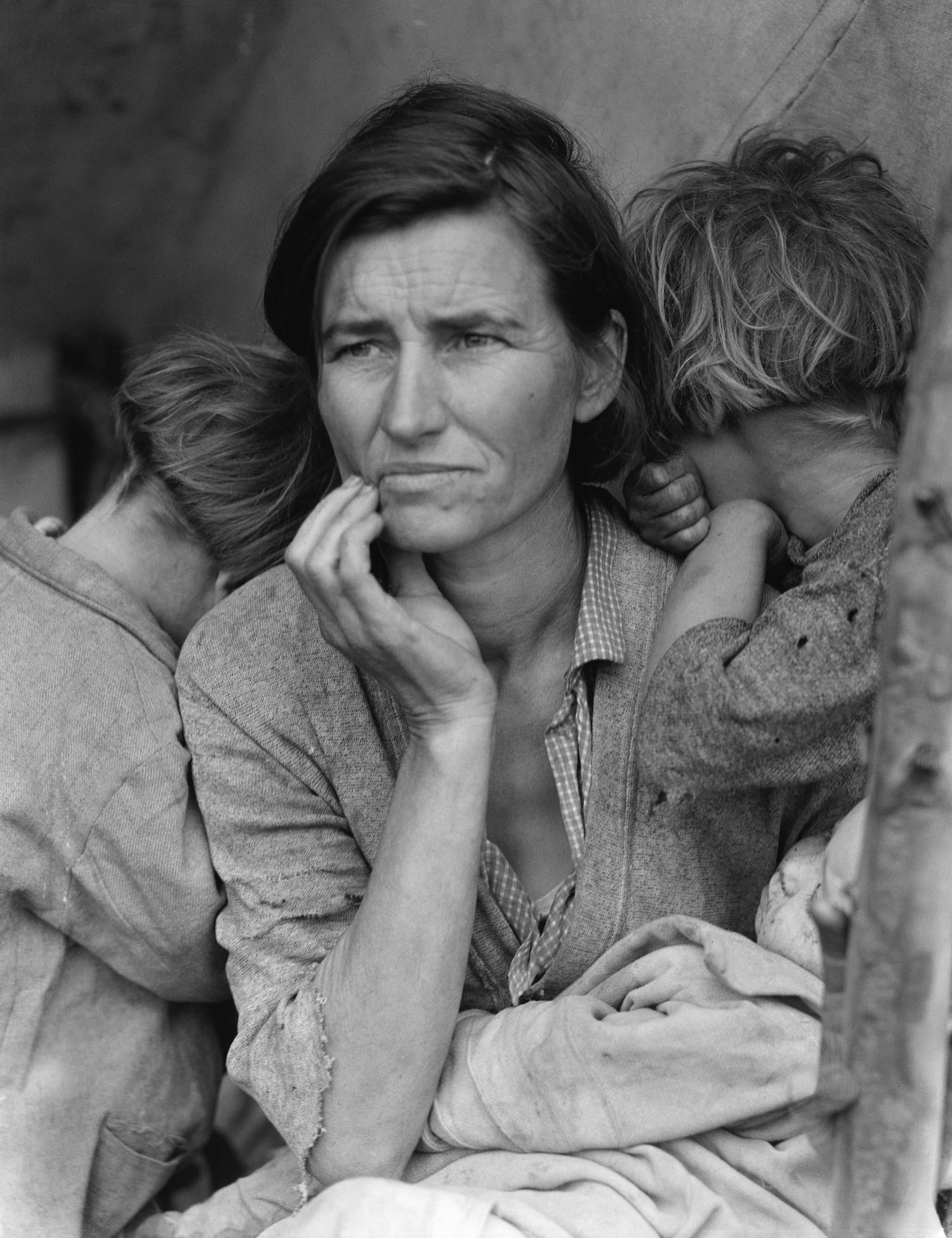
As historical context, consider Lange’s Migrant Mother, made in Nipomo in 1936. MoMA documents both the image’s wide circulation and the disagreements surrounding Lange’s later account of the encounter with Florence Owens Thompson. The photograph’s visual authority and the reliability of the narrative attached to it are therefore related questions that still need to be examined separately. 2
That distinction helps explain why a collection exhibition can matter beyond the individual photographs it contains. Bringing different kinds of work together allows a viewer to notice the assumptions carried into a room: which images are expected to provide evidence, which are granted ambiguity, and whose authorship is recognised before the subject is identified.
The Hilliard’s range also gives curatorial sequence a particular responsibility. A turn from hardship to abstraction should preserve the specificity of both. Looking closely at framing, distance, gesture and the handling of light can keep an exhibition from reducing distinct practices to a general statement about women behind cameras.
For an audience used to images moving quickly through screens, the collection offers another pace. A photograph can be considered alongside the institution that preserves it, the words that describe it and the other works brought into its company. The reward is a more exact form of attention, able to hold both an image’s immediate force and the questions that remain around it.